
Let me get one more authoritative source for the external link requirement regarding hemp/Farm Bill legal compliance.# What Makes Premium THCA Flower Different From Standard Options?
Essentially:
-
Premium THCA flower is distinguished by hand-trimming, slow curing, and independent lab verification, not just higher potency numbers.
-
A real Certificate of Analysis (COA) confirms cannabinoid content and screens for contaminants, something standard or mass-processed flower often skips.
-
Storage, strain genetics, and batch consistency separate premium grades from mids or lows sold at the same general price point.
Shoppers searching for premium THCA flower usually want proof that a product’s potency, purity, and freshness match the label before they buy. The short answer: premium grades are verified by third-party lab testing, hand-trimmed rather than machine-processed, and cured to preserve terpenes, while standard flower often skips one or more of these steps. Luminate Products prioritize quality and transparency, helping shoppers make informed decisions when choosing THCA flower.
The hemp flower market has grown crowded enough that “premium” gets printed on packaging that may not deserve it. Shopping the Premium THCA Flower category means looking past marketing language toward specific, checkable details like lab documentation, trim quality, and curing method. Those details separate flower that performs as advertised from flower that just looks the part in a jar.
Lab Testing and Transparency Set the Baseline
Any flower claiming premium status should come with proof, not just a claim.
-
A published Certificate of Analysis lists cannabinoid percentages, including THCA and Delta-9 THC, tested by an independent lab.
-
Full compliance means staying under the 0.3% Delta-9 THC threshold established by federal hemp law, a standard defined under the 2018 Farm Bill’s hemp provisions.
-
Comprehensive panels also screen for pesticides, heavy metals, and microbial contaminants, not potency alone.
Without this documentation, a buyer is relying on packaging claims rather than verified data. Premium THCA flower sold through transparent retailers typically links each batch to its own COA, so the number on the jar matches what testing actually found.
Cultivation and Handling Make a Measurable Difference
Potency numbers only tell part of the story. How a plant is grown, harvested, and processed afterward shapes the final smoking experience as much as the raw cannabinoid count.
|
Factor |
Premium Flower |
Standard or Lower-Grade Flower |
|---|---|---|
|
Trimming |
Hand-trimmed, preserves trichomes |
Machine-processed, can damage resin glands |
|
Curing |
Slow cure protects terpenes and aroma |
Rushed drying, flatter flavor |
|
Batch testing |
COA published per batch |
Testing inconsistent or unpublished |
|
Nugget appearance |
Dense, visibly frosted buds |
Smaller, less uniform, drier texture |
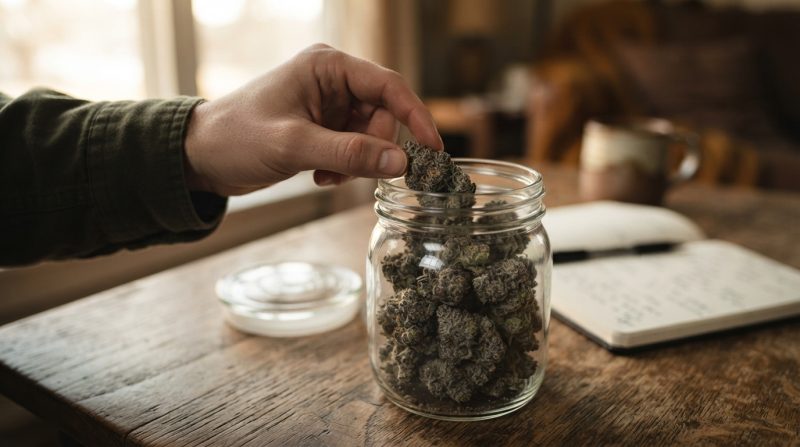
Hand-trimming protects the trichomes that hold both cannabinoids and terpenes, which is why mechanically processed buds often look less frosted and smell less aromatic. A properly slow-cured batch also holds its potency and aroma for an extended window after purchase when stored correctly in an airtight container.
Reading Potency Numbers the Right Way
A high THCA percentage alone does not guarantee a better product. Flower testing in the 20-30% THCA range is generally considered strong, but terpene content and overall cannabinoid balance affect the experience just as much as a single headline number.
Buyers evaluating a COA should check for:
- THCA percentage alongside Delta-9 THC level, confirming federal compliance.
- A terpene panel, since aroma-driving compounds influence both flavor and effect.
- Clean results for pesticides, solvents, and heavy metals.
- A batch number matching what is printed on the product label.
Flower testing above 35% total cannabinoids is worth questioning rather than assuming it signals extra quality, since unusually high readings can point to testing inconsistencies rather than genuinely superior genetics.
Frequently Asked Questions
Does a higher THCA percentage always mean better flower? Not necessarily. Terpene richness, curing quality, and trim consistency affect flavor and overall experience, so a moderately potent, well-cured batch can outperform a higher-percentage jar with a flat terpene profile.
What should a Certificate of Analysis include? A thorough COA lists cannabinoid percentages, a terpene breakdown, and screening results for pesticides, heavy metals, and microbial contaminants, confirming both potency and safety.
Is premium THCA flower federally legal? Yes, provided it is derived from hemp and stays under the 0.3% Delta-9 THC threshold outlined in federal hemp law, though individual states may add their own shipping or possession restrictions.
How can buyers tell hand-trimmed flower apart from machine-processed flower? Hand-trimmed buds tend to look denser and more visibly frosted with intact trichomes, while machine-trimmed flower often appears smaller, drier, and less uniform.
Choosing premium THCA flower comes down to checking documentation rather than trusting a label. Flower that passes independent testing, shows a detailed terpene profile, and reflects careful hand-trimming and curing will consistently outperform standard options sold under the same general category.
Where to Learn More
Luminate focuses on hemp-derived THCA flower and related products backed by published lab results and hands-on trimming standards. For readers comparing options by batch data, strain variety, or curing quality, browsing current Luminate Products is a practical next step before making a purchase decision.